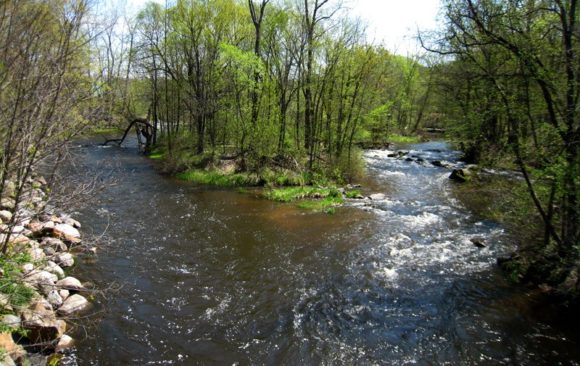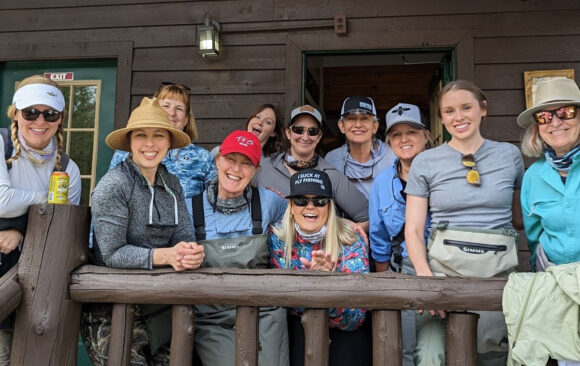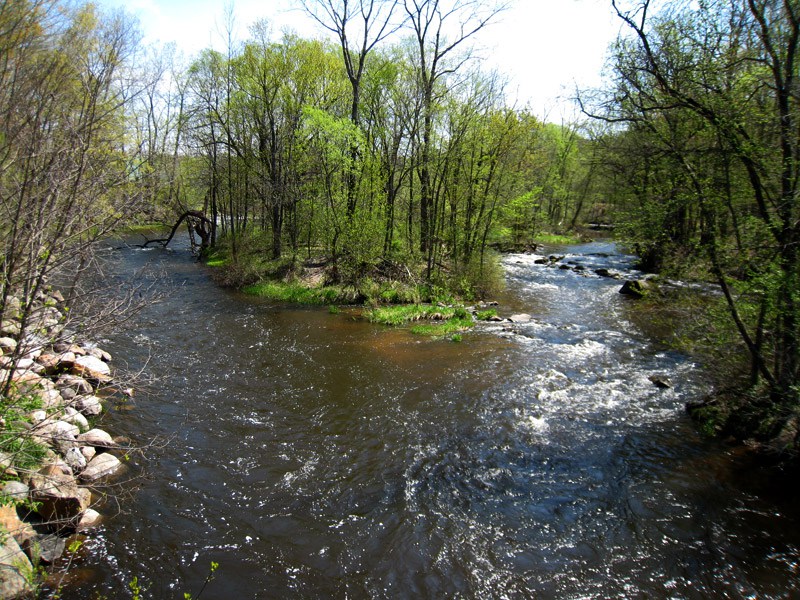

Lead by Don Messinger, several volunteers met at Hemlock Crossings Park on Saturday to work on the Pigeon River with Josh Zuiderveen of Streamworks LLC. The group installed some habitat and cleaned a stretch of the river of debris. (see more pictures)
Fortunately the garbage picked up was significantly lower than two years ago when we first worked on this stretch. If you remember the photo from that day showed a couple of tires and mounds of bottles and cans including a couple of rusted drums were removed from the river that day.
A separate crew has also been working to create a habitat map of the Hemlock Crossings section of the river. The first half was completed on Monday, August 23rd, and the second half is scheduled to be completed on September 9th.
Pics and text by Stuart Decker
Chain saws running, the backhoe at work; the Dolan habitat project is moving forward! Aaron Snell and Jackson Dirt Works are hard at it, installing log barbs in the Coldwater River.
The logs are placed in the river channel at an approximately 30 degree upstream angle. They act as mini impoundments, creating habitat by altering the river bed topography from flat to rolling and by introducing variety in the velocity of the current. Both of which make homesteads for trout in this rather straight stretch of the Coldwater River.
As was reported in an earlier update, we needed the approval of a multi-county Drain Commission board to approve of the work. Their approval is as exciting as the actual habitat work. Logs, made of wood, the usual bane of Drain Commissions, are being used to add habitat without compromising the “drainage” function of our trout fishery. It’s a rather revolutionary idea; hats of to the Commissionaires for thinking outside the box.
In fulfilling their official mandate they have asked Schrems to conduct follow up assessments of the impact these drop structures will have. Our intention and the terms of the grant mesh with their request. We will conduct a five-year follow-up that will assessment the effects and impacts of our work. Using a couple of simple items, rebar and chains (We will provide explicit details soon), we will be able to chart the effects. Schrems is convinced that the story they tell will pave a new path for management of river/drains in Michigan.
This is an exciting project. Look forward to future installments.
Saturday, August 28, SWMTU will be working with Josh Zuiderveen on the Pigeon River in Ottawa County in Hemlock Crossing Park. We will meet between 8:30-9:00 a.m. and work until approximately 1:00 p.m.
Soft drinks and water will be provided. Waders and gloves recommended. We will have some work gloves available.
For those of you who are not familiar with Pigeon River, it is a coldwater river that flows from central Ottawa County into Lake Michigan. This little river plays host to resident brown trout and gets a spring migration of Steelhead. Check out some photos from a work day in 2008.
If you plan to come, please let Don Messinger know at dmessinger@messingerlegalservices.com so we can plan work and make food arrangements. Hope to see you Saturday.
The first required step for the Dolan Habitat Improvement Project has been completed. On Tuesday, July 13th, ten Schrems volunteers, under the direction of Aaron Snell, Streamside Ecological Services, conducted a controlled fish count on the Coldwater River in the Dolan stretch.
To bring you up to speed, you can read more about this project …
SWMTU receives $40,000 to restore Coldwater River
DNR Permit to conduct project. The summary of the project states, “Temporarily excavate a total of 228 cubic yards of material from the bottom lands of Coldwater Creek and install 35 log vane structures along 2,700 linear feet of shoreline. All work to be performed according to the attached drawings. Monitoring of the permitted activities to be performed for a period of 5-years.”
By David Smith
Since 1994, Trout Unlimited has conducted a series of impressive, large-scale watershed projects under its flagship program, the Home Rivers Initiative.
In July of 2010, Michigan’s Rogue River was designated as the most recent Home River program. TU initiated this program based on the premise that everything in a watershed is related and connected, and that watershed restoration requires far more than site-specific treatments. Each Home Rivers project is a collaborative multi-year effort that combines applied scientific and economic research, community outreach, on-the-ground restoration, and the development of long-term conservation and management strategies and tools. All Home Rivers projects involve public-private partnerships and have been extremely successful in engaging local communities, demonstrating cutting-edge restoration practices, and leveraging significant resources to benefit the watersheds. Read the rest of this entry »